
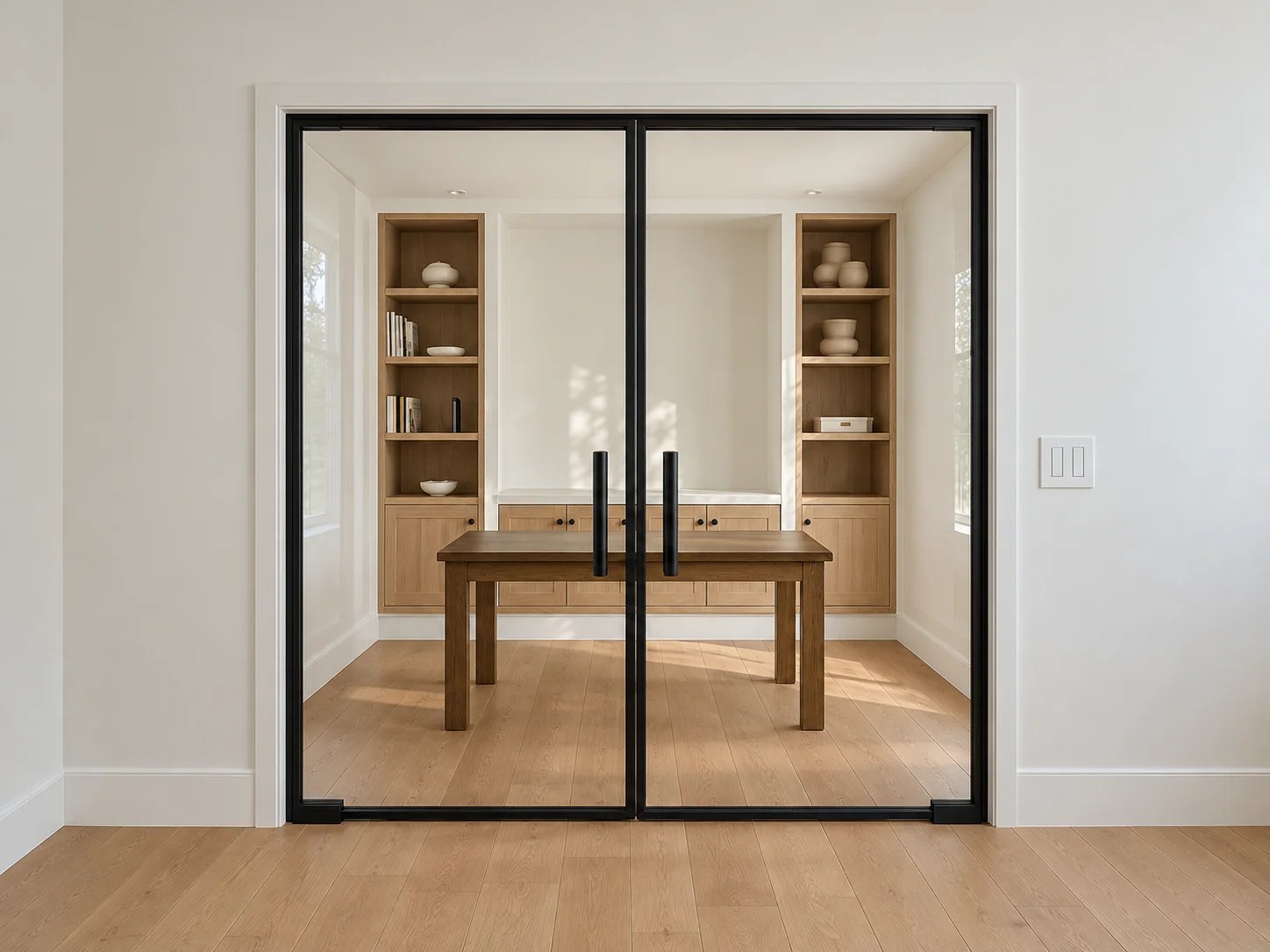
It's one of the most-Googled questions in our trade, usually asked standing in a hardware store parking lot with a piece of glass that doesn't fit. Let's save you the cleanup: no, tempered glass cannot be cut, drilled, scored, or ground after tempering. Attempting it doesn't give you a smaller piece of glass — it gives you a bin full of granules.
Why it shatters
Tempering works by locking the glass in a balance of forces: the surface in compression, the core in tension. That balance is what makes the panel strong. The moment a saw, drill bit, or scoring wheel breaks the surface, the balance releases instantly — the entire pane shatters into the small, blunt pieces tempered glass is famous for. It's not a quality issue; it's the physics that makes it safe.
How to tell if your glass is tempered
- Look for a small etched stamp in a corner — "Tempered," "Safety Glass," or a standard like ANSI Z97.1
- View it through polarized sunglasses — tempered glass often shows a distinctive pattern or rainbow spots
- Assume it if it's a shower door, glass table top, or any panel near a door or floor — codes require safety glass there
Where tempered glass is actually required
Building codes mandate tempered (or laminated) safety glass in shower and tub enclosures, entry doors and sidelights, windows near doors and floors, skylights, commercial storefronts, overhead glazing, and railings. Using ordinary glass in these spots is both a code violation and a real injury risk.
So how does custom glass get made?
The order of operations is everything: measure → cut → drill → edge → then temper. Every dimension, hole, notch and edge profile is finalized while the glass is still ordinary "annealed" glass. Only then does it go through the tempering oven. This is why custom glass is fabricated to your measurements rather than trimmed on site — and why accurate templating matters so much.
"With tempered glass you get exactly one chance to be right. Measure twice, cut once, temper last."
What this means for you
If you have a panel that doesn't fit, don't try to trim it — and if you need a cut-out for a tap, hinge, or outlet, it has to be specified before tempering. Our shop handles the entire sequence: we measure on site, fabricate to the millimetre, then temper. See our custom cut glass services or send us your measurements — we'll take it from there.