
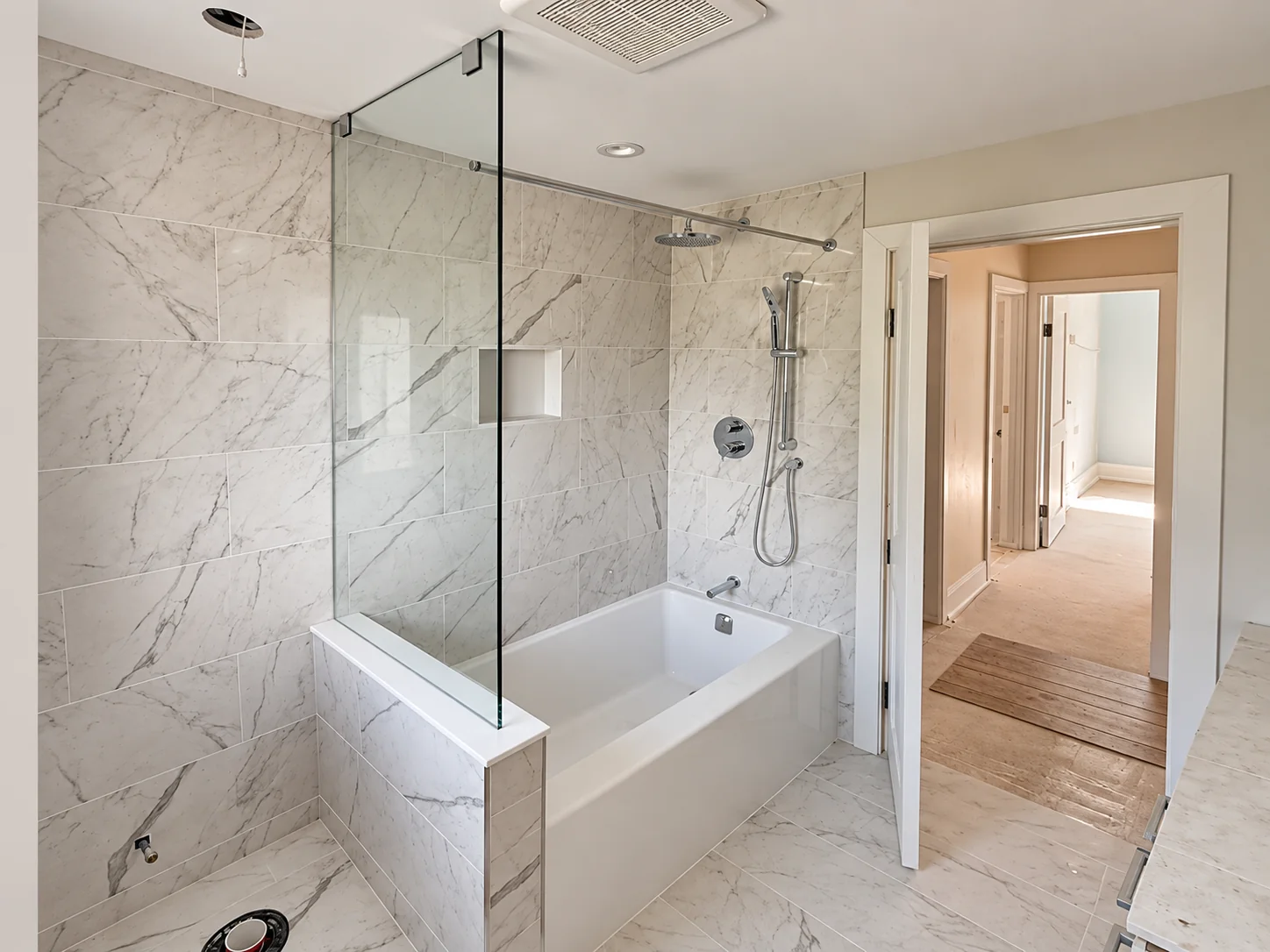
If you’re tired of the clingy shower curtain but aren’t ready to give up the tub, glass is the upgrade. It’s one of the most satisfying small projects we do — half a day on site, and the bathroom reads ten years newer. Here’s how the options break down.
What’s the difference between a tub screen and a tub door?
A fixed screen is a single frameless panel covering roughly half the tub — you walk around it to get in. It’s the cleanest look and the least hardware, but it contains spray rather than sealing fully, so showerhead aim matters. A hinged door adds a swinging panel to that fixed screen for more coverage. A sliding enclosure covers the full 60-inch opening with bypass doors — maximum containment, closest to a shower-stall feel.
Will a tub door fit my standard 60-inch bathtub?
Yes — 60-inch alcove tubs are the most common size we work on. We template the exact opening after your surround is tiled, so out-of-square walls and non-standard tubs are handled the same way. Panels are typically 10 mm (3/8″) tempered glass — thick enough to feel solid, light enough for daily use.
Does a half screen actually keep the water in?
For a normally aimed showerhead, yes — the screen blocks direct spray and the rest falls inside the tub. A rainfall head pointed toward the open end will splash out; that’s a placement issue, not a screen flaw. If you want zero compromise on containment, choose the sliding enclosure.
Is glass on a tub hard to keep clean?
Far easier than a curtain — no mildew, no liner replacements. A squeegee pass after showering and a weekly wipe keeps it clear, and a factory protective coating cuts that effort roughly in half.
Curious what your tub would look like in glass? See our enclosure work or send us a photo of your bathroom — we’ll tell you honestly which option fits.