
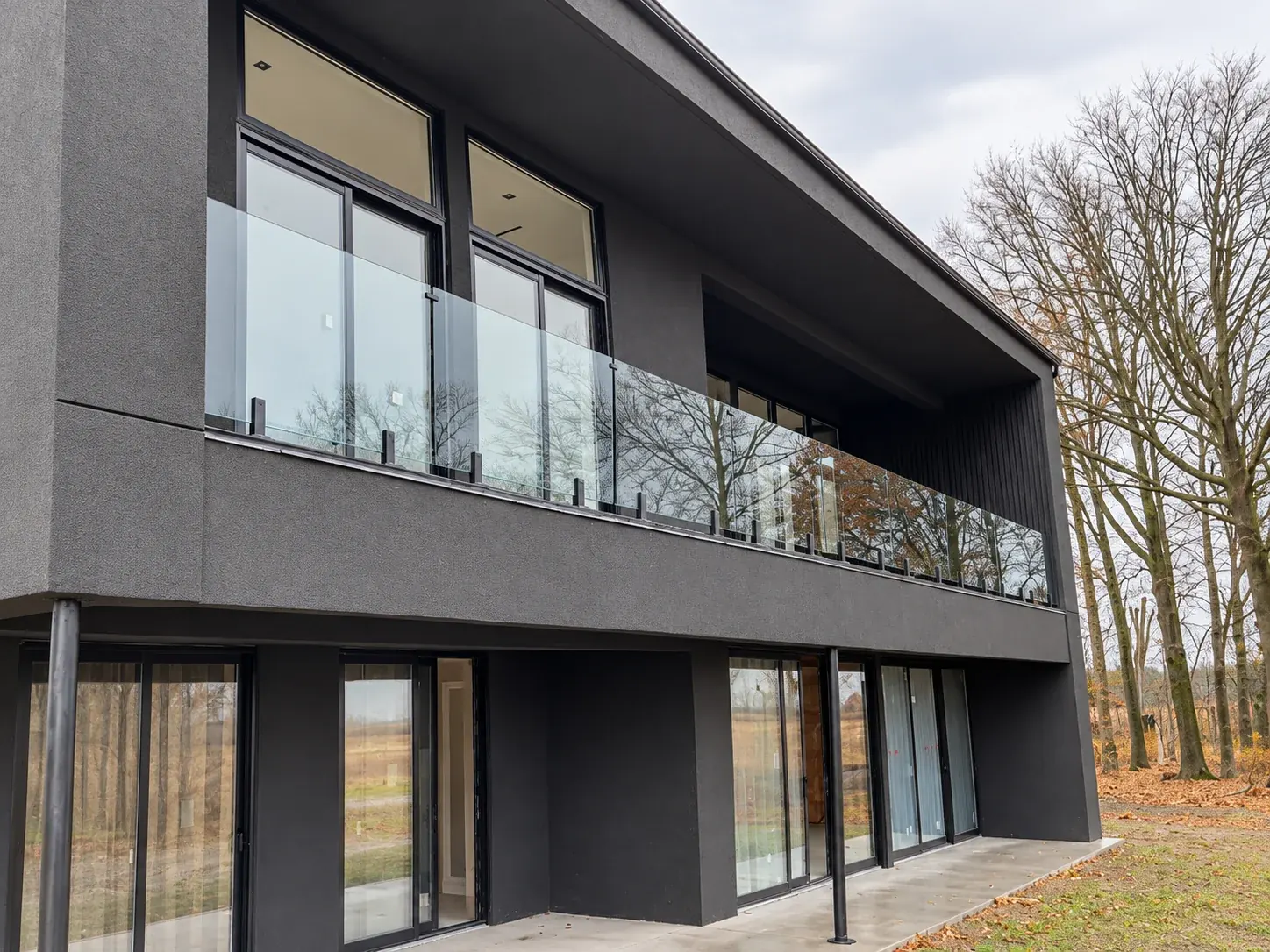
“Do I have to have a rail on top?” is the most-asked question in our railing consultations — usually right after a client falls in love with a completely frameless photo. Here is how the rules actually work in Ontario.
What does the Ontario Building Code say about top rails?
The OBC requires guards to resist specified loads applied at the top of the guard. With ordinary monolithic tempered glass, a top rail (or continuous cap) is how that load path is guaranteed — if one panel failed, the rail ties the remaining panels together. Without a top rail, the guard must demonstrate equivalent performance on its own.
When can a glass guard go top-rail-free?
When it uses laminated or tempered-laminated glass engineered for the application. The interlayer keeps a broken panel standing as a barrier until replacement, which is the safety function the top rail otherwise provides. The engineered shop drawings we supply document this for your permit and inspection.
Why do some companies still insist on a top rail?
Because it’s cheaper and simpler: standard tempered glass plus a metal rail avoids laminated glass and engineering. It’s a legitimate, code-compliant system — just not the only one. If a quote says frameless is “not allowed,” what it usually means is “not what we install.”
Does top-rail-free cost more?
Yes — laminated glass and the engineering add roughly 15–25% over an equivalent railed system. Most clients deciding on a view-forward deck or balcony consider it the point of the whole project. Compare our railing systems or ask us about your deck.